


▶ [Part 1] Why Did You Choose Bandai Namco Studios?
In Part 2, we’ll go into their actual work, what’s rewarding about it, and what kind of mindset they think is important for server engineers.We’re going to dig deeper into how server engineers make their games more fun!
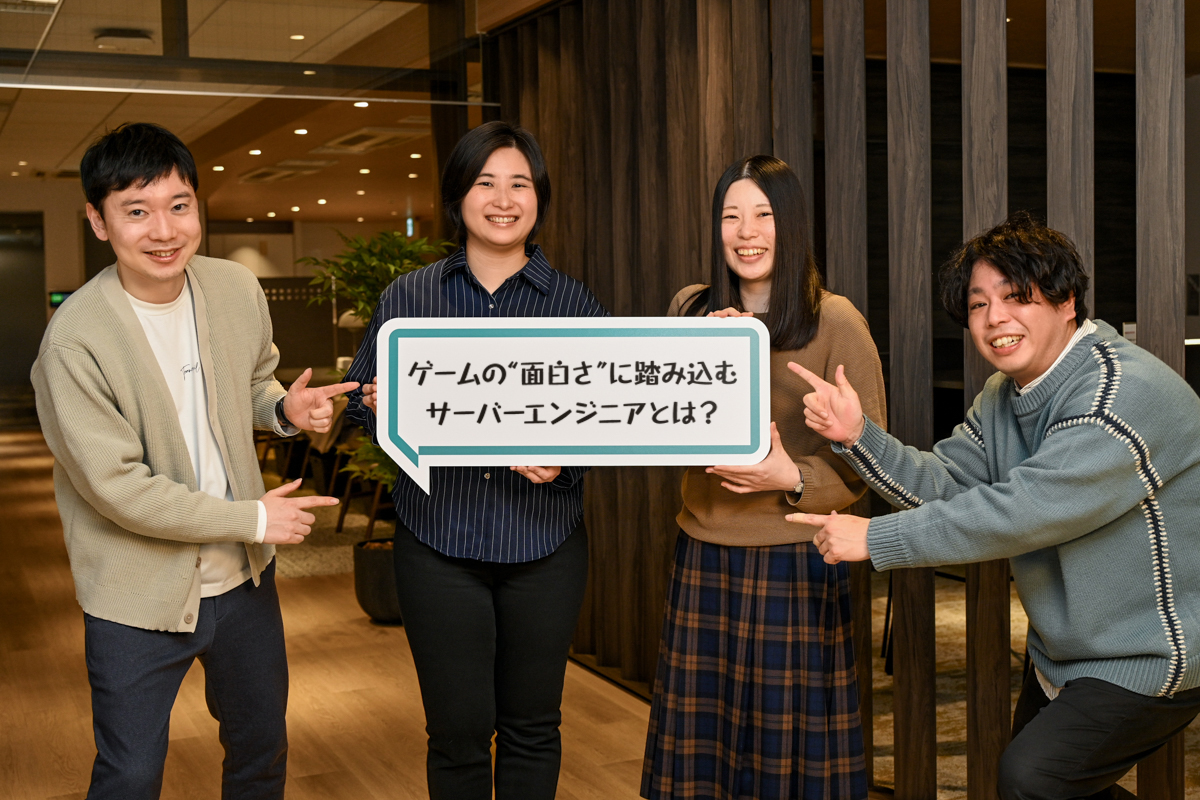
It’s Not Just Server Work; Their Many Roles
―Let’s start by going over the peculiarities of your work.
Aoki: Our team handles a variety of server-related tasks and we try to keep ownership over them, whether that’s building infrastructure, developing server applications, CI/CD, management tools, and anything else server related.
Other companies usually have separate, dedicated infrastructure engineers, management engineers, and application engineers, but our team handles all aspects of development.
Which is why we need to consider things like future extensibility when we design features, instead of just making what the project needs right now.
You’re responsible for a wide variety of things, but it’s a holistic approach that feels more fulfilling than if you were just making a specific part of the system.
Matsushima: Put simply, my current job has me solve technical issues happening between the companies developing the client and server software.
I’m technically a client engineer, but since I have experience in server and infrastructure-related tasks, I can approach development from the perspectives of both parties.
Making sure everyone is on the same page is especially important when there are different companies working separately on your client and server software. My job is to identify potential issues from a technical perspective and handle them as needed according to project progress, making sure that everything goes smoothly for both client and server developers.
Ho: I get involved in all aspects of a project, so my work naturally varies a lot.
You can roughly split it into three types:
The development of server architecture used by multiple projects, for example server-side systems that start PvP or co-op sessions after players have been matched with each other.
Project support for new projects, where I help projects estimate budgets, required headcount, possible technologies, and make other preparations for the project as they ramp up.
I also work with external developers, where I share our experience working on online functionalities for console games and advise the planners and engineers of our partners.
As you can see, my job is unique in that I provide comprehensive technical support for multiple projects, as well as address the pinpoint needs of particular projects.
Amano: I’m a Technical Director on server-side online technologies in a console game project.
I don’t do much actual engineering as most of my work is about managing the project’s progress and schedules. So I do things like schedule management, task management, discuss schedules with game planners, and make sure overall development is friction-free.
Since I’m positioned as a server engineer, I try to steer the project in directions that make the server team’s life easier in any decisions we make. The team members are in charge of the actual server design and implementation, and I make sure it fits nicely into the overall picture.
The Fun of Being an Server Engineer and How They Affect the Game Experience
―What’s fun or engaging about your work?
Aoki: For me, it would have to be that I get to work on server-related tech in a comprehensive capacity.
I have to take into account infrastructure considerations on top of the applications being made, so I naturally get to consider lightweight design and ease of improvement and scalability.
It’s challenging work, but I can contribute to making the game fun or maximizing the user experience from a server technology perspective. It’s very rewarding to be involved in a project where you get to see everything being made.
Matsushima: I find being able to see projects from both client and server perspectives interesting. You normally only get to work on things on either side, but it really feels like you have total control over the network features of the project so you can design holistically without being worried if it’s under your jurisdiction. That makes it fun.
Not every project needs someone in this position, so I think it’s very valuable that I get to experience this kind of work.
Ho: I find it fun to support systems that are highly real-time sensitive.
There are so many things to think about in a PvP game, such as the optimal location of servers, ways to shorten matchmaking times or reduce latency, and more. All of these things have a direct effect on user experience.
So I feel great achievement when something is running “normally” consistently.
Another rewarding part of the job is that I get to think about what to do in order to make the game more fun from a server engineer’s perspective, as I’m briefed on the background and goals behind a particular feature design.
Amano: For me, the most engaging part of work is being able to work with my current team members.
Everyone’s really helpful; not just the server team members, but people from the project, and everyone from our partner companies. You run into issues during game development, so being in an environment surrounded by people you want to work with is very important.
Working with interesting technologies is good and well, but I believe who you work with greatly changes job satisfaction.
It’s Not Just Technology, but Also Dedication to Work
―What do you pay particular attention to when working?
Aoki: For me, it would be creating systems that are flexible to change while still being resilient.
Games have to be fun, so designs change all the time during development. Even after release, content is changed and added. Despite all these changes, game servers have to remain stable as they’re directly connected to user assets and user experience.
The challenge of game server development lies in balancing these opposing factors, but that also makes it fun.
As an engineer, I believe that being able to achieve this balance through design and implementation is important, and it extends beyond the individual as it’s a team effort.
Matsushima: I try to be proactive in finding and resolving issues.
With how specialized everything is, issues at the boundaries between disciplines tend to be left to the wayside, such as tasks between client and server engineers, or planners and engineers. When responsibilities become unclear, it can easily lead to trouble.
That’s why I try to address things when I think they’re a problem, without thinking too hard about whose responsibility it is.
So not just finding problems, but I try to resolve them as well. It’s something I try to keep in mind.
Ho: For me, I think about how the work I do can make the game better beyond just implementing the designs described to me.
At my previous workplace, server engineers tended to just program what was described in the design documents they were given, but at Bandai Namco Studios, we’re told why things are designed the way they are and the intended user experience.
That motivates me to give my own suggestions and opinions to improve the game experience as part of the game creation team, instead of just passively make what I’m given.
I try to make sure what I make is fun as well, as server development is still part of game development.
Amano: I call it “try to not try too hard”.
Of course, I start with an understanding of what it is we’re making, but if I try too hard to do things my way, I won’t get to leverage the talents of the team.
There’s no singular “right way” to make or play games, so I think it’s crucial to create an environment where the actual developers can make the most of their strengths.
That’s why I make sure to have a work environment where I am in charge of the final product, but I only brief members on the important points and let them express themselves.
Everyone being able to freely work by themselves will ultimately benefit the team.
Messages from the Server Team
―Finally, which Bandai Namco Studios Value (Grow BNS: Challenge, Autonomy, Pursuit, Collaboration) do you keep in mind or pay special attention to as you work?
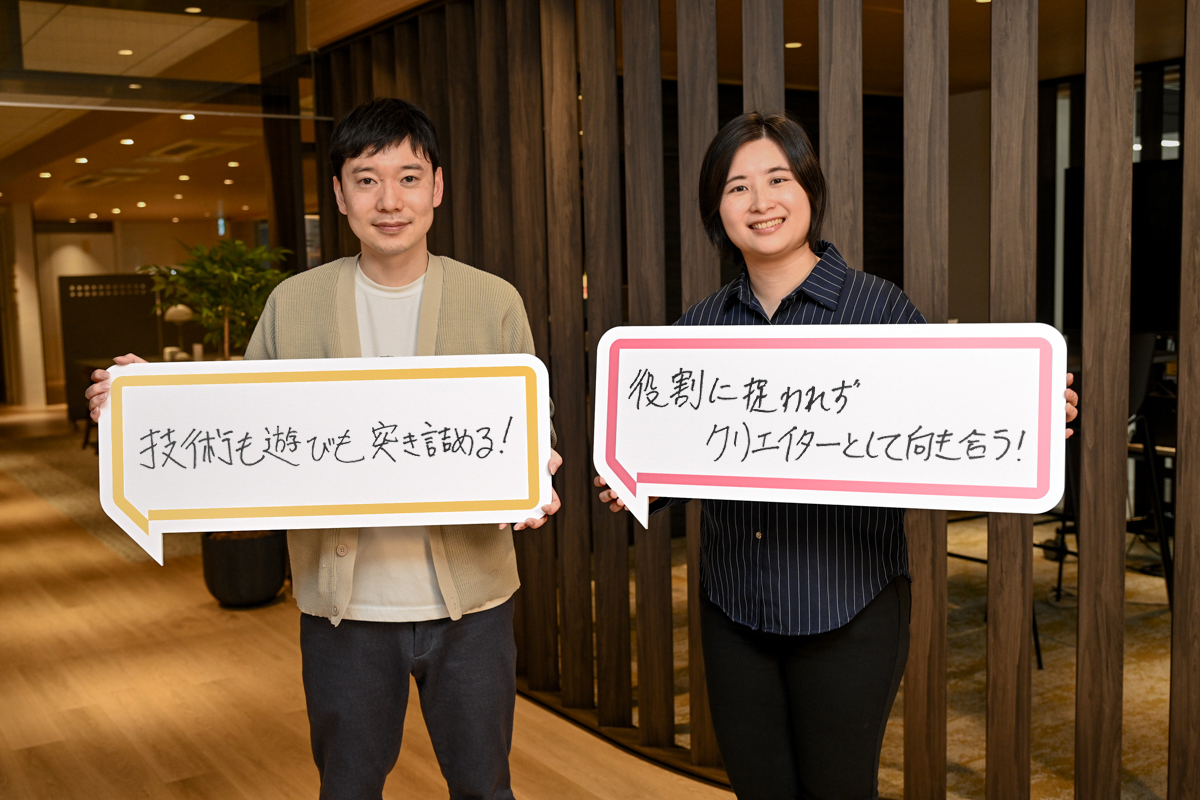
Ho: “Be a creator and go beyond your assigned role!”
Aoki: Pursuit
Since I’m an engineer, there’s part of me who wants to keep pursuing new technologies. But there’s the game developer part of me who wants to pursue new forms of entertainment.
It’s important to keep learning about new tech or good designs not only for the sake of learning new stuff, but to improve things like gameplay and user experience.
It’s not just about choosing tech or gameplay; both are needed! I think this is an important trait for engineers working at game companies.
Ho: Collaboration
I think of myself as a game engineer first and server engineer second.
We work as a team and make the game fun as a team. I think that’s an important mindset to have. While we need to assign roles by discipline, I don’t believe we can make a good game if everyone only thinks about what they’ve been put in charge of.
That’s why I try to think about if something makes the game as a whole fun, even though I’m just an engineer.
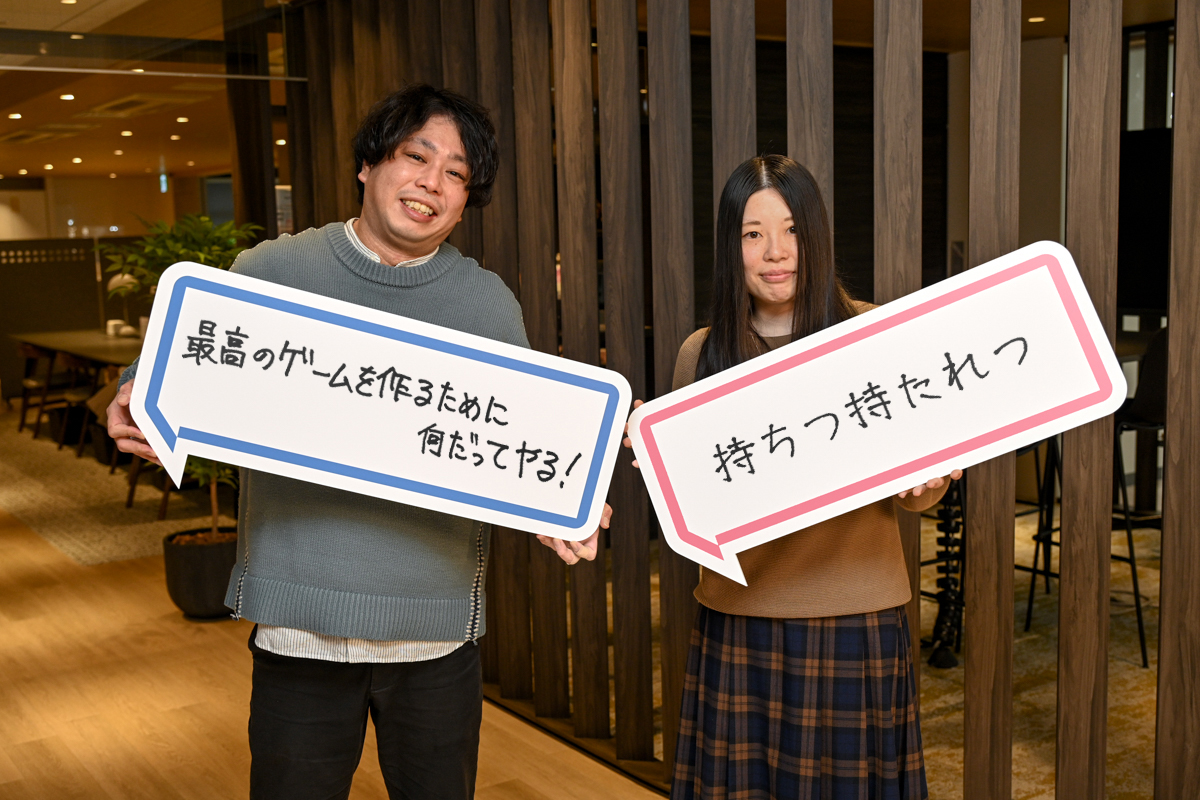
Amano: “Give and take”
Matsushima: Autonomy, Challenge
I believe the autonomy to find and act upon problems is needed to make a project successful. Taking a look outside your assigned role will ultimately move the entire project forward.
I also think it’s essential for engineers to challenge themselves so that they continuously grow. Being constantly interested and aware of the technologies in the world, as well as being able to try things because it seems interesting, regardless of whether it’s possible or not. I think this will lead to personal growth and make games more fun.
Amano: Collaboration
I’m the type of person who is motivated by making others happy. I’m glad when our players enjoy our games, and work feels rewarding when a coworker says I was helpful or when a business partner is impressed with our work. It sometimes feels like my motivation for working is to collect praise.
It’s not about doing everything yourself; you create with someone and that ends up making someone else happy. This cycle gives me the energy to try my best.
In that sense, I think collaboration would be the value that I think about the most.
―Thank you very much!
Server engineers at Bandai Namco Studios provide more than just back-end technologies for games, and work every day to directly impact how fun their games are.



