


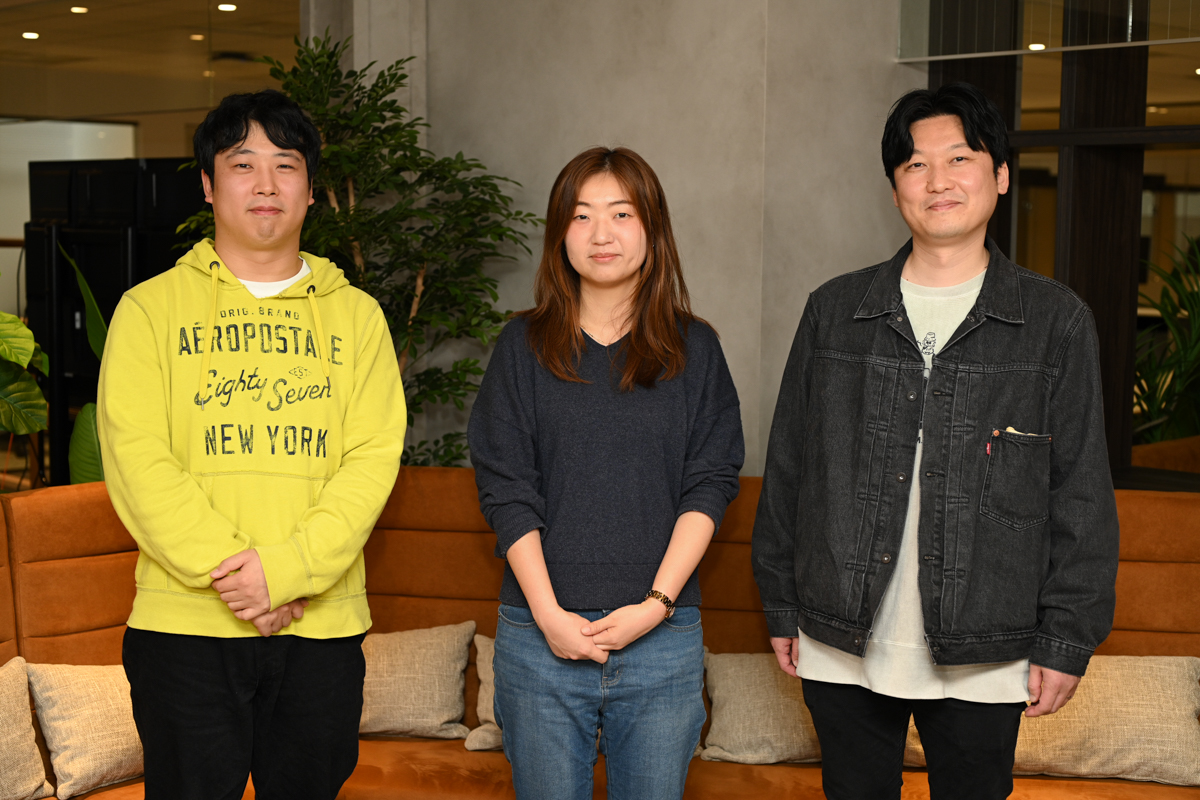
In this article, we interviewed three of our character artists hired through our mid-career hiring program!
They come from different backgrounds, so we asked them why they chose to work at Bandai Namco Studios, what they think is rewarding about their work, and what they like about the work environment.

2021 mid-career hire
2021 mid-career hire
2023 mid-career hire
Changing Course to Character Production
―What kind of work have you done in the past?
Minowa: After I graduated university, I made 3D assets like characters, monsters, weapons, and more for a game development company. I then changed jobs to work for a traditional crafts company, not only producing goods, but also working on web design, advertising, and more. I then returned to the game industry as I felt like making characters was more enjoyable for me.
Kwag: In addition to working in the game industry, I recently gained experience in the audiovisual and amusement machine industries, working on animation, effects, lighting, compositing, and more, not only just modeling. I like 3DCG as a whole so it’s all rewarding work, but it’s more fun when I work on games as I play them as well and it feels like I’m working for my own enjoyment. When I was small, I admired how people’s names would appear on the credits at the end of a movie or anime, and I always wanted to make something that had my name on it (laughs).
This was one of my motivations for working in the game industry.
Yamazaki: I’ve worked in many capacities, such as art direction, game design, planning, illustrations for marketing, UI direction, and more as they relate to character design and character modeling.
I get assigned to different roles for each project, but most of my work recently has been character modeling, sometimes in lead positions.
The Deciding Factor for Working at Bandai Namco Studios
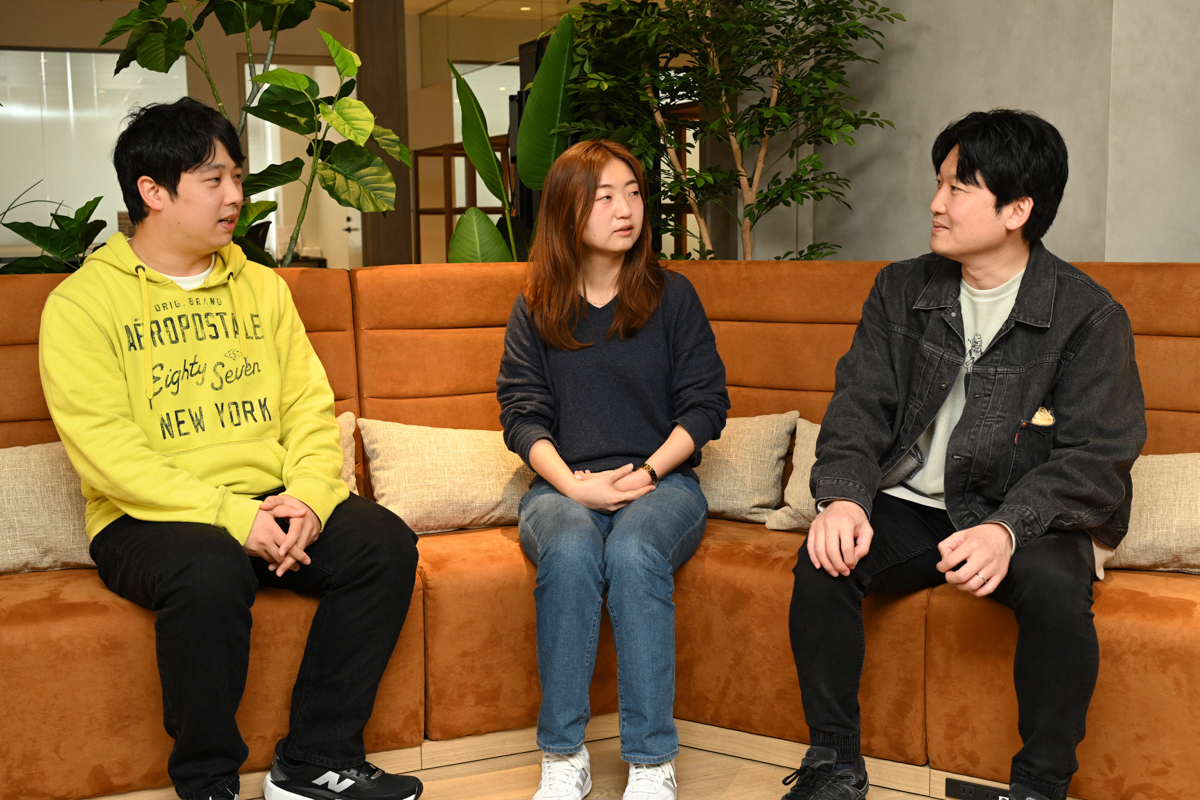
―What was your reason for wanting to work at Bandai Namco Studios?
Yamazaki: The project I was on at my previous job met a major milestone, so I started thinking about the future of my career and how I wanted to work. A change in my living conditions also motivated this.
I took a look at the job postings on the Bandai Namco Studios website as I always liked the Tales Of series, and luckily enough, the company was hiring. Looking deeper into the posting, it focused on character creation so I thought it was the perfect place to leverage my experience. I could easily imagine myself working at the company, so I applied regardless of my chances of actually getting hired.
Minowa: I actually had an opportunity to collaborate with Bandai Namco Studios when I was working at my previous company. That gave me an opportunity to know the development environment and office conditions, which made me want to work in a similar environment.
I also had a strong conviction on wanting to work in the part of game development involved in making the game that people actually play, and not just “any job” in the industry, so having access to the popular IPs here at Bandai Namco Studios was also very attractive.
Kwag: My previous job had me stationed at the companies we were partnered with, and one of these companies happened to be Bandai Namco Studios. I always had a liking for cool-looking photorealistic graphics, and the project I was working on at the time fit the bill perfectly, so my first impression of Bandai Namco Studios was very positive. Like Minowa-san, I also found the work environment and team members very appealing.
When I started thinking about what I wanted to do with my career, I could choose to continue my current style of working at various companies, or I could also settle down at a single company. I remembered my experience at Bandai Namco Studios when it came time to change jobs, so I sent in my application because I wanted to do something new there.
Experiencing the Company Culture of Bandai Namco Studios From the Inside
―What did you feel was unique about Bandai Namco Studios’ work environment when you finally started working here?
Minowa: When I finally started my job here, I noticed the artists could involve themselves in development in various ways.
At my previous jobs, everyone had clearly divided roles and it was our job to focus on maximizing quality in that role. At Bandai Namco Studios, we tend to solve problems as a team, so artists get many opportunities to participate in actual game development as well.
This way of working is more demanding on the skills of the employee, as it asks them to have a broad understanding of other disciplines. At the same time, it provides many opportunities to try new things. The work feels rewarding as I get to work on gameplay or the game experience in addition to character production.
Kwag: I felt that women are given many opportunities here.
Many take leadership positions, and when I first joined the company, I worked under a female leader. I admired the way she was able to greatly influence the project and was inspired to become a leader myself. I actually am one now, and it was nice to have a role model that I could look up to.
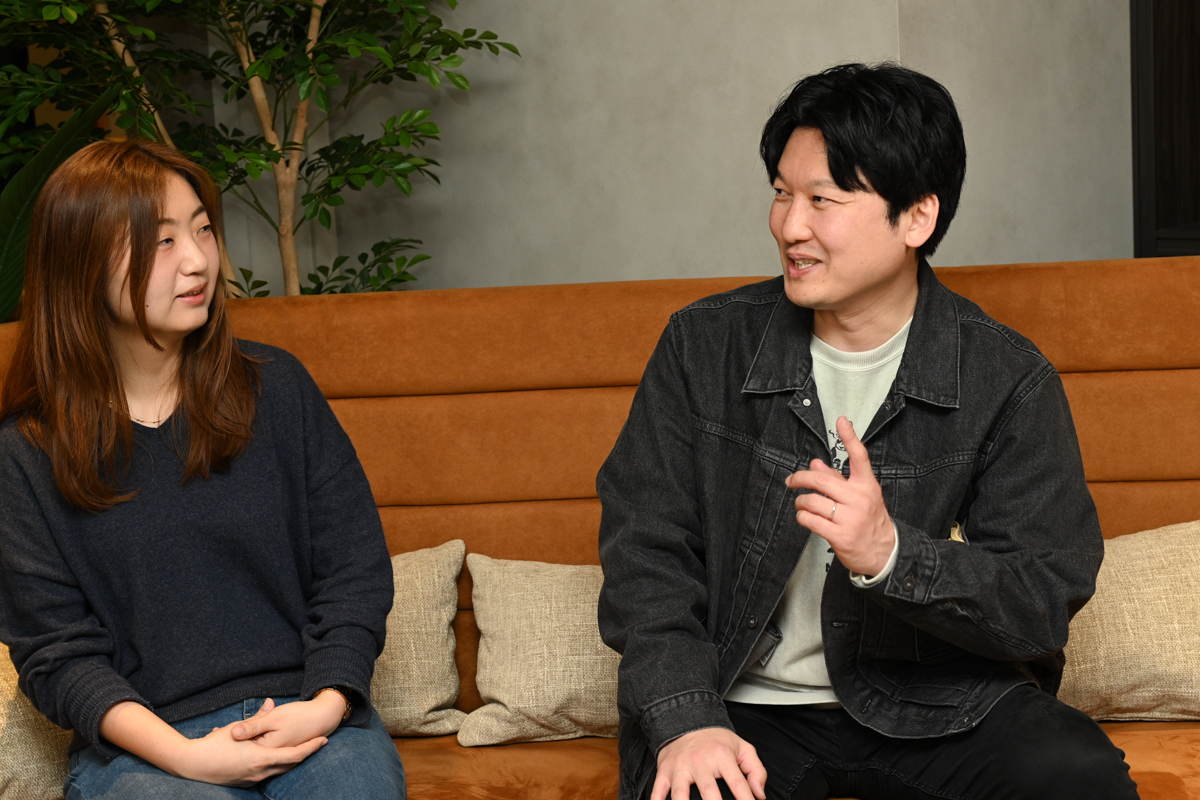
Yamazaki: It was very appealing that many employees had experience in making games in a variety of genres on different platforms. Having this all of this institutional knowledge means that you type out your problems in company chat and someone will have an answer. You can get advice from people you don’t directly work with, so it’s very helpful.
I also feel the company makes it easy for employees to take care of their children while working.
I’m currently taking advantage of the childcare supporting provided by the company, where I get to work from home several times a month so it’s easier to balance housework with my job. It’s tough to raise kids and do chores alone, especially when you have young children, so it’s really nice that the company provides support so I can help raise my child with my wife while I work.
*Childcare, caregiving support, and more│Diverse workstyles
Learnings and Discoveries From Broadening Careers
―Can you share some learnings or discoveries you found through work?
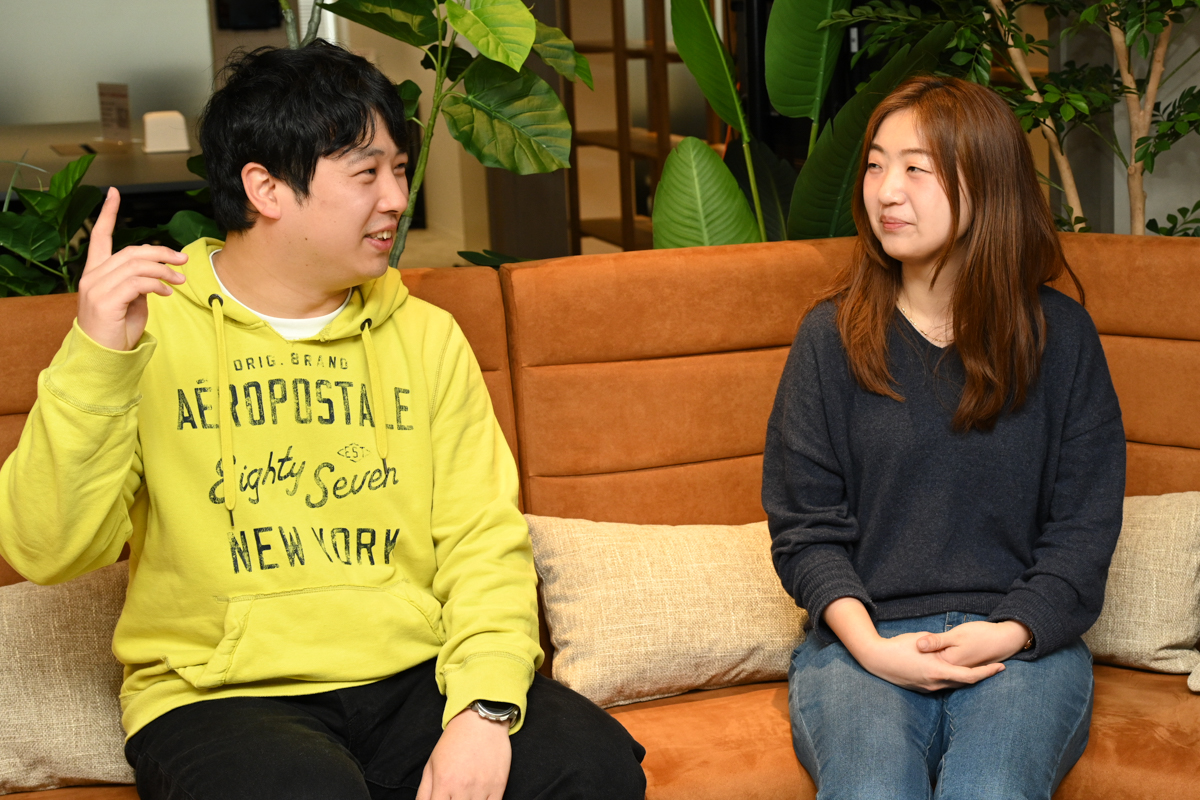
Yamazaki: A learning from my direction work is that the number of revisions does not necessarily correlate with final quality.
Polish is important, but depending on the number of revisions and how you provide feedback with each revision, you might stress the team member out and negatively affect their motivation. It taught me the importance of making decisions not from an individual asset level, but from a project-wide perspective. I also started paying more attention to how I communicated with people, adjusting my attitude for each team member.
Minowa: Hardware places various restrictions on video games, so you run into issues like in-game models not animating on specific hardware. I once ran into an issue where I spent too much effort chasing visual quality that something I was making took up more resources than expected when running on actual consoles. We ultimately tuned it down to spec, but the experience taught me to frequently test ahead of time.
I felt the importance of accounting for the characteristics of the hardware instead of blindly chasing visual expression, something I wouldn’t have learned if the company did not make games across multiple platforms and genres.
Kwag: My perspective greatly broadened when I assumed a leadership role.
Work felt rewarding when I was just a modeler making in-game assets, but when you become a leader, you have to work with other sections to solve issues for the whole project. You gain more opportunities to look at game development in a holistic manner and involve yourself in the project at a deeper level than before. There is much to learn and I still feel myself growing as a developer, which is rewarding in its own way.
The Fun of Character Production and the Possibilities Presented
―What’s fun or engaging about your work? What do you pay particular attention to?
Minowa: I do a lot of workflow testing for work, where new technologies and tools would often be used. I never stop learning so I find that fun.
On a special occasion, I got to provide direction on merchandise as part of my developer work. It was really exciting as I got to think from a completely different perspective than normal. I don’t get tired of the work because each project asks different things of me, and I get to do different things.
Kwag: We talked about revisions earlier, and I also pay attention to the feedback I give and how it will make something better.
When I make a revision request, I try to minimize the number of revisions needed by making it easy to understand my intentions, providing clear reasons for the changes. In the past, I had an unforgettable experience where I received persuasive feedback on my work. Now that I’m a leader, I want my own team members to have the same experience.
Yamazaki: There are times when ideas are generated during the process of character creation led to new gameplay and game experiences. I have personally experienced this many times on the projects I have worked on.
I think it’s interesting that ideas from diving deep into character creation can connect to game design, and it’s something unique to this type of work.
Messages from Everyone
―Let’s end with a message for people who are thinking of applying!
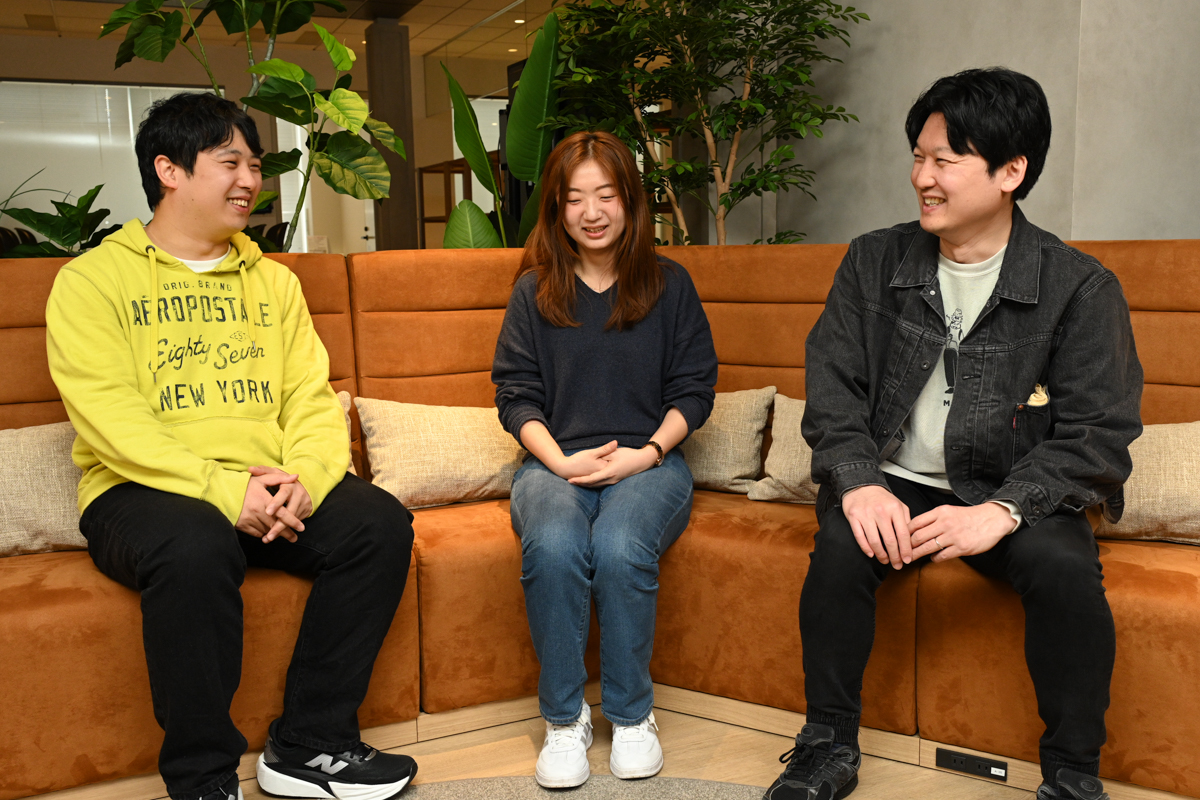
Yamazaki: The Bandai Namco Studios work environment is one where it’s easy to have discussions about what you want to do.
Some people want to pursue creative endeavors, others want to try their hand at management; the company has all kinds of positions so you can build your career as you like. It’s an excellent environment for those who want to expand their horizons.
Kwag: I agree. I also feel like this is a place where it’s easy to discuss career direction and the company does a lot to help you grow as an employee.
We also have internal workshops, so it’s motivating to work in a place where artists can continuously improve their skills.
Minowa: I feel that the company cares about both the fun of making games, from the creator’s perspective, and the fun of playing games, from the player’s perspective.
Oftentimes on big projects, people usually focus on the “stems and leaves”, or the issues immediately relevant to them. I feel that Bandai Namco Studios is a developer that also cares about the “roots” of game creation, so I recommend working here if you have a creator mindset!
―Thank you very much!
TEKKEN™8 & ©Bandai Namco Entertainment Inc.



